Hey everyone, before I begin, I would like to thank everyone for their great comments and support, it really motivates me to step up my game and write articles that will truly benefit you. I also started a new blog that will explore the "Principles of Power," a more serious topic but one that is very interesting nonetheless. If your interested, please check it out!
 http://PrinciplesofPower.blogspot.com.
 Alright, now this leads me to my main article of the day, McDonald's and money. I'm not going in depth about the boring stuff, but will talk about the techniques they have used over and over again to become and stay one of the most powerful corporations in the world.
We all eat McDonald's, and our children will be eating it in the future as well, but even amidst all the concerns for "Healthy" eating and opting for organic food choices, McDonald's is still reaping in huge profits every year, and spreading their influence to basically every corner of the world.
I have worked at McDonald's, written a long 10,000 word report on them for college, and it was the first stock I ever bought in mid 2006 at just over 35$ per share. Just for your information, McDonald's is currently trading at 76$...|

First of all I will begin with the most crucial aspect of McDonald's success, its brand. Since the age of two, most children can recognize McDonald's by either it's main logo, the "M" signifying the golden arches, or by their mascot, Ronald McDonald (notice the cheesy rhyme?)
Again, simplicity is key here, consumers do not really want to think about what they want to buy, they want to be told what they want, and whenever we see a McDonald's sign, our subconscious is reminding us of our cravings for their food.
Again, simplicity is key here, consumers do not really want to think about what they want to buy, they want to be told what they want, and whenever we see a McDonald's sign, our subconscious is reminding us of our cravings for their food.
The McDonald's brand is carried out by hundreds of thousands of employees who are given great training and opportunities for advancement. Even though many regard McDonald's as a poor job, and in some cases it really is, one cannot deny the rigorous training all members receive upon being hired. This is crucial for monetary success because with so many restaurants around the world, if your employees are lacking, your business will begin to rot and fester from the inside and eat its way straight to the core.

Secondly, McDonald's advertisements are everywhere and they always partner themselves with the most popular celebrities, athletes, Olympic Gold Medalists, you name it. Honestly, I would not be surprised at all if Justin Bieber became the next brand ambassador for McDonalds, since Justin Timberlake has been out of the spotlight for a while. In order to balance this commitment of paying millions of dollars for these celebrities to endorse their brand, McDonald's has their own charity which helps children all around the world.
Ronald McDonald's charities raise millions of dollars every year to help less privileged children around the world, and this is extremely important for McDonalds to uphold their image and not seem like they are doing everything just for the money. Even though millions of people may become fatter because of eating a lot of McDonald's, donating a few hundred million does make you look a lot better, and associating yourself with the leanest and meanest athletes of the time, and being an official sponsor for the Olympics, Fifa, and every major sporting event doesn't hurt either.
So what can you learn from McDonald's? I'll give you some tips that you can apply in your everyday life. First of all, don't be afraid to make mistakes, they will teach you how to succeed if you reflect upon them carefully and learn from them. For example, McDonald's Pizza was a huge failure, as well as the Lobster burger, and many others.
So what can you learn from McDonald's? I'll give you some tips that you can apply in your everyday life. First of all, don't be afraid to make mistakes, they will teach you how to succeed if you reflect upon them carefully and learn from them. For example, McDonald's Pizza was a huge failure, as well as the Lobster burger, and many others.
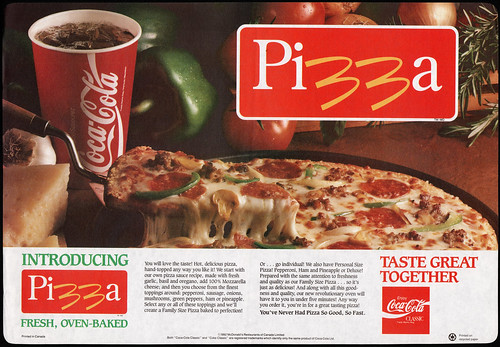
Secondly, if you are considering buying a stock like McDonald's, make sure you understand the company very well before you buy it. Although penny stocks may give you the opportunity to achieve a huge amount of growth in a short amount of time, there is a much bigger risk that you could lose a tremendous amount of money. Blue-Chip stocks like McDonald's have a far lesser chance of disappearing off the face of the earth, unlike many penny stocks which disintegrate within months of speculation.
Thirdly, associate yourselves with powerful allies to further your cause, never let your image become ruined by joining forces with those who are foolish, impatient, and greedy. Make sure you achieve balance by helping out the poor and the needy as well, to retain that "human" essence that attracts us to those who can bring benefits to our lives.
Lastly, and similarly to what I said about Apple, there is no such thing as bad advertising. If you are not being seen, you might as well have never existed. McDonald's is successful because everywhere we go we can see with our own two eyes the legacy they have created. Although we might not like it, feel jealous towards it, or simply do not care about it, it still exists and is growing each and everyday, fuelled by the consumers that have embraced their food and the comfortable lodgings they create. You must be fluid, and accept change as an opportunity for growth, not something that will bring about your downfall. That is why McDonald's has survived for so long, being able to change with the times like a chameleon, yet always remaining on top!
Lastly, and similarly to what I said about Apple, there is no such thing as bad advertising. If you are not being seen, you might as well have never existed. McDonald's is successful because everywhere we go we can see with our own two eyes the legacy they have created. Although we might not like it, feel jealous towards it, or simply do not care about it, it still exists and is growing each and everyday, fuelled by the consumers that have embraced their food and the comfortable lodgings they create. You must be fluid, and accept change as an opportunity for growth, not something that will bring about your downfall. That is why McDonald's has survived for so long, being able to change with the times like a chameleon, yet always remaining on top!